OUTER SPACE // OUTER HEBRIDES
“Following the Island Going Residency 2019 in the Outer Hebrides exploring remote landscapes and an ocean voyage to St Kilda, I have conducted research into the rich archaeological evidence of prehistoric astronomy in the highlands. Whilst in North Uist and surrounding islands, we visited neolithic standing stones, stone circles and chambered cairns- structures that demonstrated astronomical activity. Stones and Cairns point towards the equinoctial, rising or setting sun and stellar alignments, quartz boulders hold lunar significance. This was a place where studying the sky was central to the cultural development of ancient societies. By applying Archaeoastronomical techniques, it is possible to directly observe and experience the structures that neolithic architects used to situate themselves within the wider cosmos. Still remote and largely undeveloped, the Outer Hebrides allows for direct engagement with these archaeological sites, uninterrupted by skyscrapers or light pollution.
At present, the Outer Hebrides is passing into a second age of astronomical significance. The northern latitude, coastal location and geography of North Uist is well suited to satellite launches. Spaceport1 is in the planning stages and is set to become the UK’s first vertical launch site, with test launches expected to begin by next year. The UK government anticipates over £3.8 billion in revenue over the first decade the site will be in use, and will create new jobs in the region. Spaceport1 will be used specifically for launching satellites directly into polar orbits, a particularly useful route for Earth observation satellites. This new development and use of land in North Uist will fundamentally change the relationship between residents of the Outer Hebrides and Outer Space.
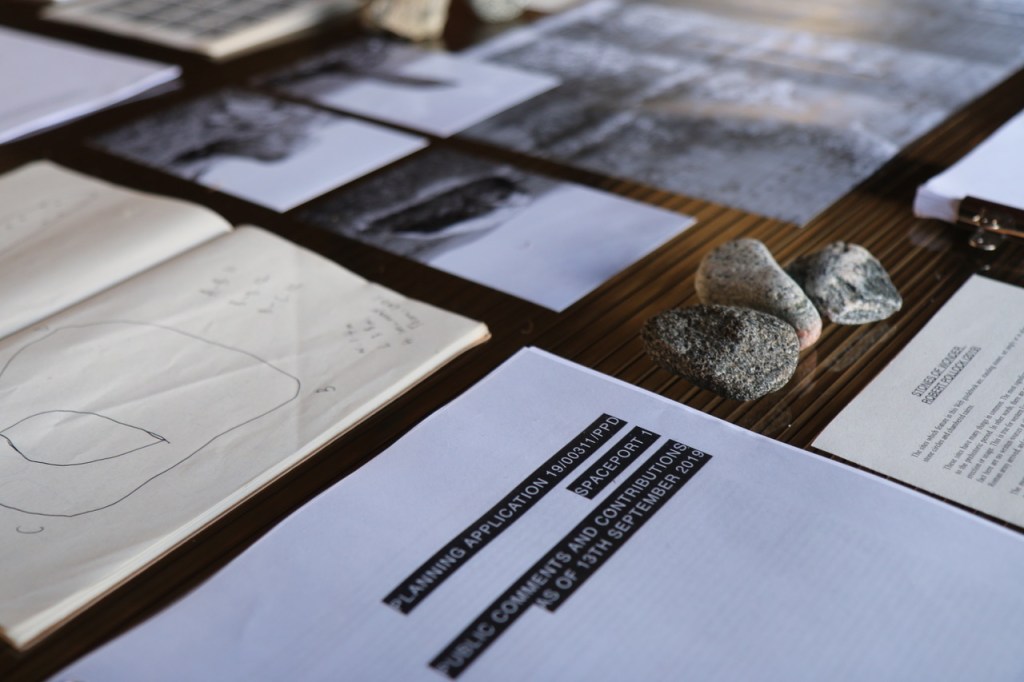
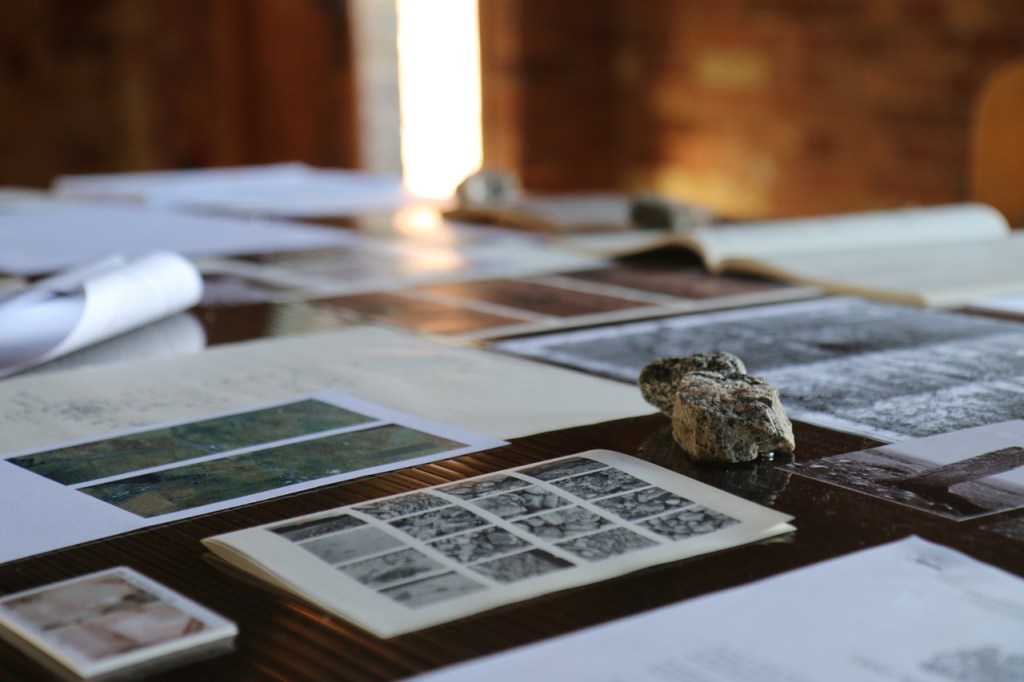
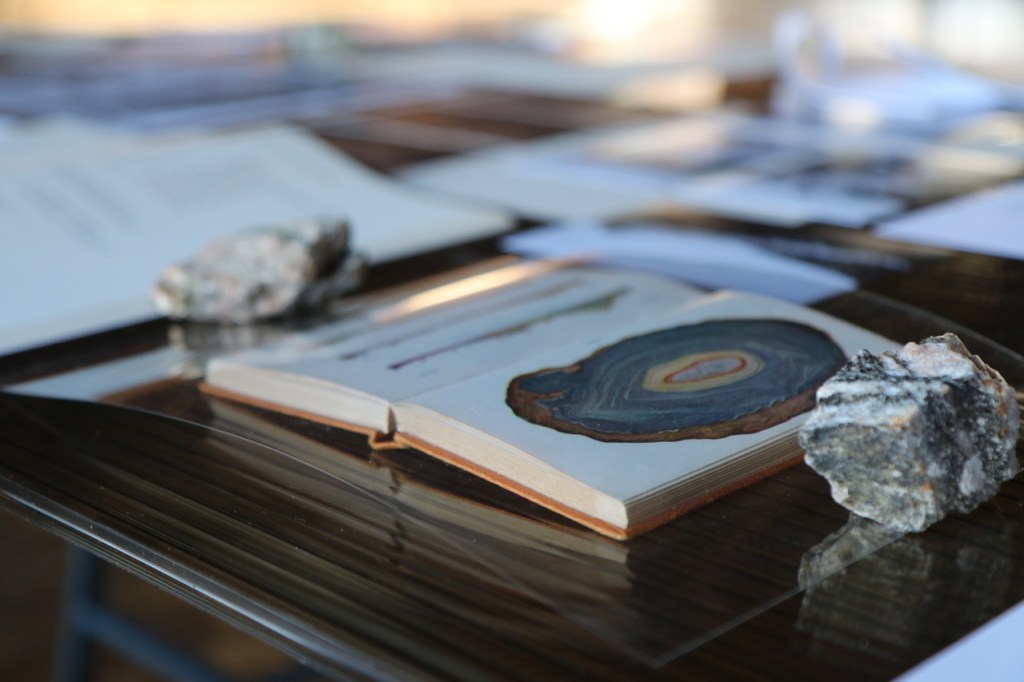
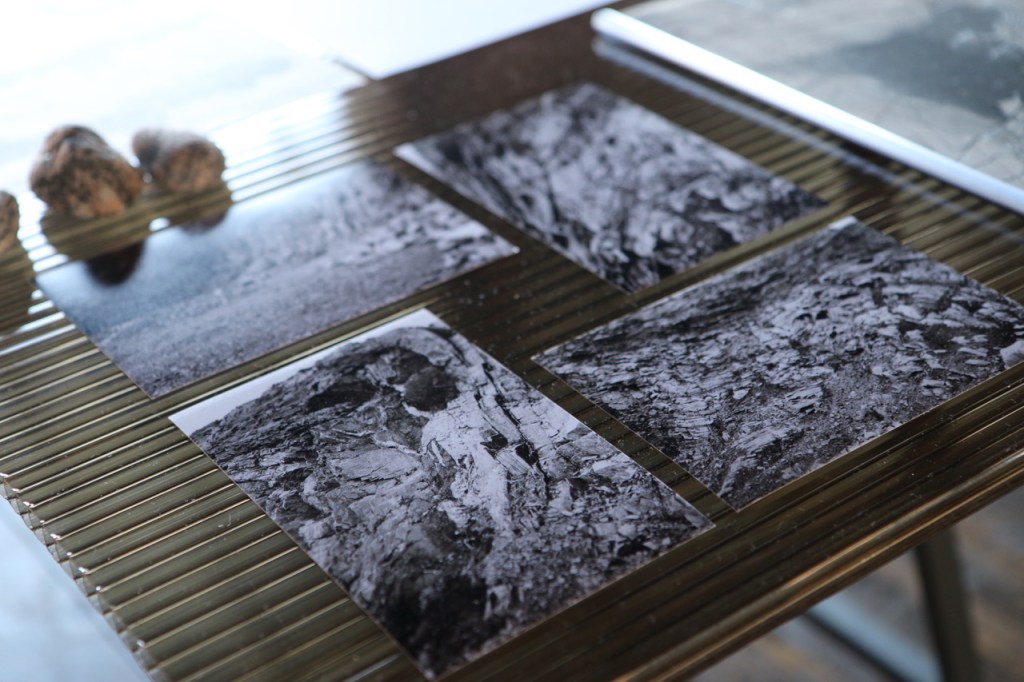
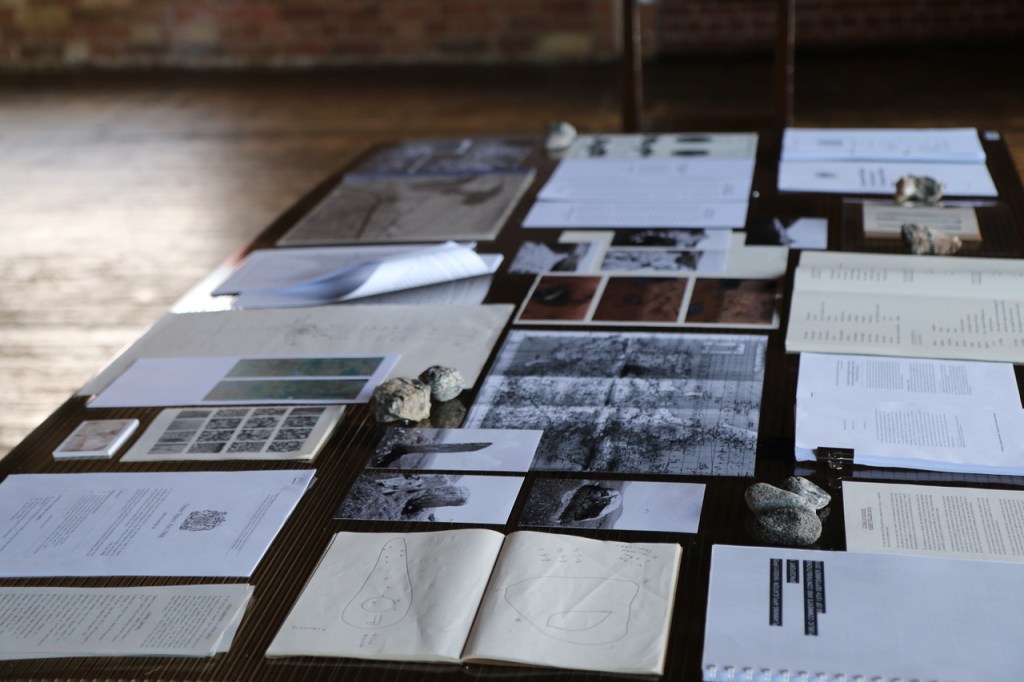
For “Through the Looking Glass/ Humans changing view of the Universe” I curated an archive relating to the astronomical importance of the Outer Hebrides, that traces the history of neolithic archeoastronomical sites, and the future of Spaceport1. It examines the current launch proposals and parallel the astronomical alignments of the neolithic and satellite launch sites. The archive consists of a collection of maps, photographs, documents, plans, drawings, stories and artefacts to demonstrate the astronomical significance of this remote landscape, traced through the past three thousand years and into the future. It contains artefacts and documentation generated both on the Island Going residency and subsequent research.
This history of the Outer Hebrides embodies humanity’s changing view of our place within the universe, from one of observation and worship to understanding and utilisation. The archive intends to bring discussions of the UK’s progression in the Space Industry to public attention, and celebrate a rich neolithic astronomical history.”

Bethany Rigby was one of the five participants on the ‘Island Going’ residency 2019. Her work will be exhibited as part of an Island Going residency exhibition at An Lanntair and Taigh Chearsabhagh in early summer 2020 alongside work from Alasdair Doyle, Beatrice Lopez, Rachael Bailey, Dan Shay.
 islandgoingresidencies.art.blog